


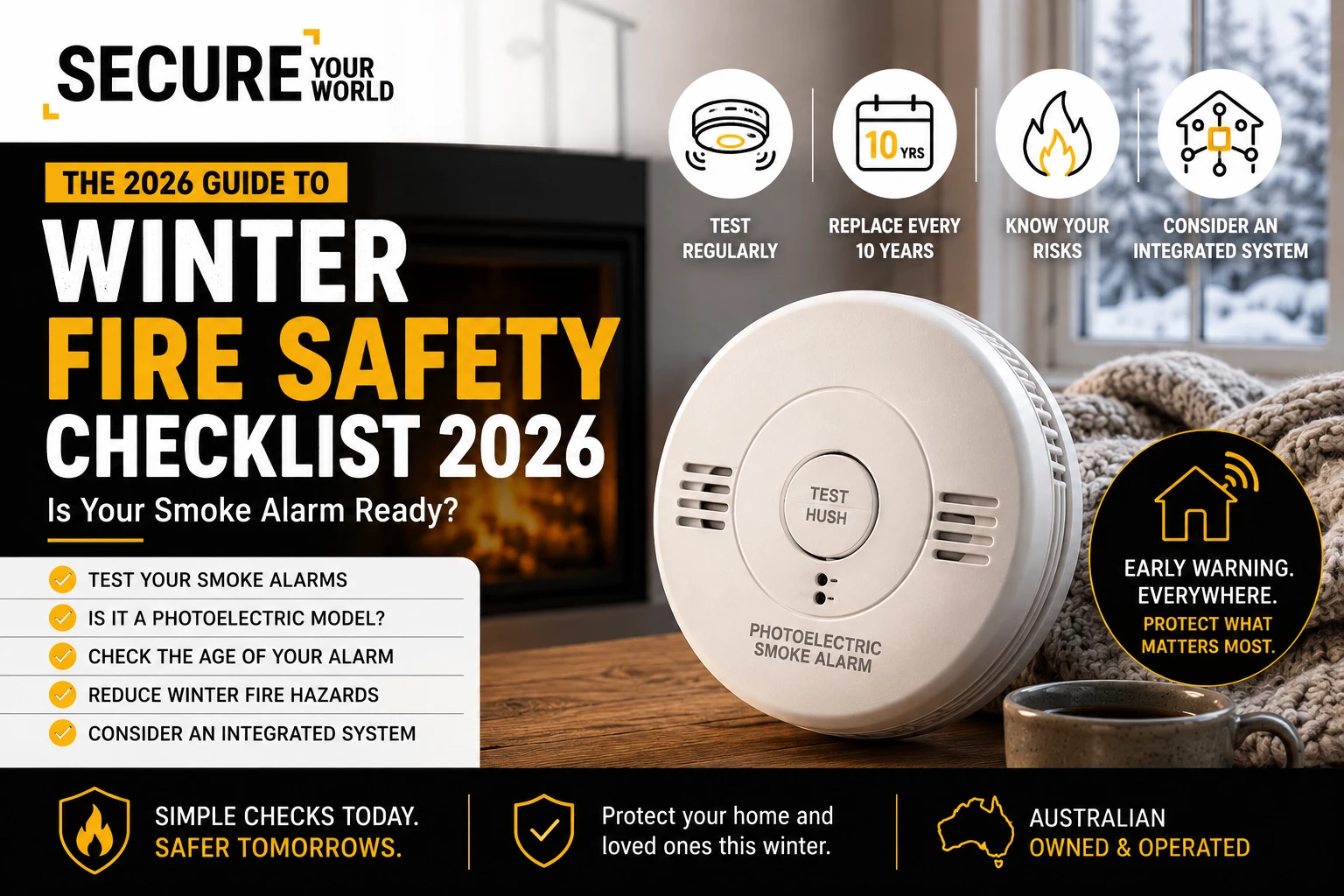
The 2026 Guide to Winter Fire Safety: Is Your Smoke Alarm Ready?
As winter settles across Australia, most households rely more heavily on heaters, electric blankets and fireplaces to stay warm. While these appliances provide comfort, they also contribute to a higher risk of house fires during the colder months.
Effective winter home fire prevention starts with a few simple seasonal checks around your home. One of the most important places to start is your smoke alarm. Does it still work? Is it a modern photoelectric model? And if you have a larger home, would an integrated smoke alarm system provide better protection?
This winter fire safety checklist for 2026 will help you answer those questions and identify a few simple maintenance tasks that can improve your home's safety.
Why Winter Demands Extra Fire Safety Checks
Many of the activities that make winter more comfortable also increase fire risk. Portable heaters are used for longer periods, electric blankets come out of storage, and power boards often end up supporting multiple appliances at once.
Some of the most common winter fire hazards include:
- Portable heaters placed too close to furniture, curtains or bedding
- Worn or damaged electric blankets
- Overloaded power boards and extension leads
- Fireplaces and chimneys that haven't been cleaned or inspected
- Charging lithium-ion batteries indoors near combustible materials
While these risks are well known, many homeowners overlook a simple fact: a smoke alarm is only effective if it's working properly. Regular testing and maintenance should be part of your seasonal home maintenance routine, alongside checking your home's security devices and emergency lighting.
Does Your Smoke Alarm Still Work?
Testing your smoke alarm only takes a few minutes and can help ensure it performs when you need it most. As a simple fire safety maintenance tip, make smoke alarm testing part of your seasonal home maintenance routine at the start of every winter.
Here's a simple five-step check:
- Press the test button to confirm the alarm sounds.
- Replace the battery if your alarm uses a replaceable battery.
- Gently vacuum dust from the alarm vents to help keep the sensor clear.
- Check the manufacture date. Most smoke alarms should be replaced after around 10 years, even if they still respond during testing.
- Listen for end-of-life warning chirps or fault indicators.
It's also worth remembering that a smoke alarm can still make a sound during a test while its sensing technology has deteriorated over time. That's why checking the age of the unit is just as important as checking the battery.
If you're unsure when your alarm was installed, look for the manufacture date printed on the back or side of the device.
Is Your Smoke Alarm a Photoelectric Model?
Not all smoke alarms detect fire in the same way.
Photoelectric smoke alarms are designed to detect larger smoke particles typically produced by slow, smouldering fires. These fires can develop for some time before visible flames appear, making early detection especially important while occupants are asleep.
Many homeowners are surprised to discover they're still relying on older ionisation smoke alarms installed years ago.
To identify your alarm, remove it from its mounting plate if safe to do so and check the product label. Many manufacturers clearly identify whether the unit is "photoelectric". If the information isn't obvious or the alarm is approaching 10 years old, it may be worth considering a replacement.
Some of the key photoelectric smoke alarm benefits include:
- Faster detection of many common smouldering household fires
- Fewer nuisance alarms from everyday cooking activities
- Improved early warning while occupants are sleeping
- Compatibility with many modern interconnected alarm systems
Smoke alarm requirements differ between Australian states and territories, and regulations continue to evolve. If you're upgrading your system or replacing older alarms, it's a good idea to check the current requirements that apply in your location or seek advice from a qualified installer.
Should You Upgrade to an Integrated Smoke Alarm System?
If your home has multiple bedrooms, more than one storey or larger living areas, it may be worth considering integrated smoke alarm systems.
Unlike standalone alarms, interconnected systems communicate with one another. If smoke is detected in one part of the house, every connected alarm activates, helping alert occupants wherever they are.
Depending on the system, interconnected alarms may be:
- Hardwired during construction or renovation
- Wirelessly interconnected for easier upgrades in existing homes
Integrated smoke alarm systems in Australia are becoming increasingly popular because they provide earlier warning throughout the entire property rather than relying on a single alarm being heard.
The right solution depends on your home's size, layout and applicable building requirements, so it's worth comparing available options before upgrading.
Your Winter Fire Safety Checklist for 2026
Before winter is in full swing, take a few minutes to complete this checklist:
- Test every smoke alarm in your home.
- Replace alarms that are approaching or beyond their recommended service life.
- Confirm your smoke alarms are photoelectric models where appropriate.
- Keep portable heaters at a safe distance from furniture, bedding and curtains.
- Inspect electric blankets for damage before use.
- Avoid overloading power boards or extension leads.
- Have fireplaces and chimneys cleaned if they're used regularly.
- Charge lithium-ion batteries on hard, non-flammable surfaces away from exits.
- Test backup batteries in security systems, emergency lighting and other critical devices.
Completing these simple maintenance tasks each winter can significantly improve your home's overall safety.
Stay Safe This Winter
Preparing your home for winter isn't just about staying warm—it's about reducing avoidable risks before they become emergencies.
A few minutes spent testing your smoke alarms, checking their age and confirming whether they're photoelectric models can make a meaningful difference to your home's fire safety. If you're planning a replacement or looking for greater protection, integrated smoke alarm systems may also be worth considering, particularly in larger or multi-storey homes.
If it's time to upgrade your fire safety equipment, explore Secure Your World's range of smoke alarms and home security solutions designed to help protect Australian homes year-round. If you're unsure which system best suits your property or your state's requirements, a qualified installer can help ensure your home is both well protected and compliant.